
Communicating Chiropractic with Confidence: Building Collaborative Relationships in Pediatric Care
Communicating Chiropractic with Confidence: Building Collaborative Relationships in Pediatric Care
A course presented by Dr. Brandi Benson, DC, CACCP, CSSPP for pediatric chiropractors, chiropractors in family practice, and doctors seeking to strengthen interdisciplinary communication, professional confidence, and community integration.
Pediatric chiropractors are increasingly working within interdisciplinary care teams that include occupational therapists, physical therapists, speech-language pathologists, lactation consultants, pediatricians, and other healthcare professionals. In these shared-care environments, the ability to communicate chiropractic concepts clearly and confidently is essential for building trust, supporting families, and creating effective collaboration.
This course is designed to help chiropractors confidently articulate their role in pediatric care while fostering strong, professional relationships with other providers. Dr. Brandi guides participants through practical frameworks for translating chiropractic and SOT concepts into functional, developmentally relevant language that aligns with the models used by allied health and medical professionals.
Through real-world case examples, communication scripts, and actionable exercises, participants will learn how to initiate professional conversations, provide clear case updates, support families.
What You’ll Learn
- Reframe Interdisciplinary Care – Understand why collaboration is essential in today’s pediatric landscape
- Understand the Sensory-Motor Loop – Describe sensory input – motor output in terms other disciplines use while explaining chiropractic’s contribution in the shared framework
- Translating Chiropractic (SOT®) into Shared Professional Language – translate chiropractic cranial adjusting, dural tension, and proprioceptive concepts into functional outcomes
- How to Communicate with other Providers – scripts, emails, updates, etc.
- Support Families Navigating Multiple Providers – help parents understanding the varying roles without creating confusion
- Become the Chiropractor Others Want to Work with – establishing your professional identity
Why Take This Course?
- In a time when many of our pediatric patients are facing multiple challenges and parents are looking for answers, help and support this course gives the chiropractor the tools to communicate the importance of what we do as a baseline for increasing function and improving outcomes.
- Working with other practitioners has become the norm and having the tools to keep the communication lines open to allow for the best outcome for the child is paramount in a pediatric chiropractic practice. Success in keeping patients under care to receive the full benefits of chiropractic is the focus of this course.
Course Contents
6 Modules | 6 CTAs
-
Module 01 Hypermobility – A Growing Dilemma
-
Module 02 Diagnostic Protocols
-
Module 03 Evaluation Protocols – The Questions to Ask
-
Module 04 Evaluation Protocols – What to Look For
-
Module 05 Advice for Clinicians – Comorbidity
-
Module 06 Summing it All Up – Resources
Meet the Instructor
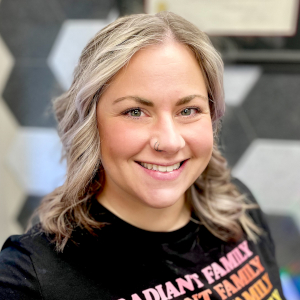
Dr. Brandi Benson, DC, CACCP, CSSPP, is a pediatric-focused chiropractor and co-owner of a family-centered practice in the Kansas City area. She has over 12 years of clinical experience working with infants, children, and neurodiverse populations, with particular focus on neurodevelopment, cranial dynamics, feeding challenges, and complex pediatric presentations.
Dr. Brandi has completed extensive postgraduate training in pediatric chiropractic care. She holds her pediatric certification (CACCP) through the International Chiropractic Pediatric Association and the Academy of Chiropractic Family Practice, and is a Certified Sacro Occipital Technique – _Pediatric Practitioner (CSSPP) through Peak Potential Institute under the mentorship of Drs. Martin Rosen and Nancy Watson. She has also completed advanced training in functional neurodevelopmental with the Academy of Neurodevelopmental Practices.
Her clinical work emphasizes thoughtful assessment, nervous system regulation, and individualized care rather than protocol-driven treatment plans. She regularly collaborates with lactation consultants, therapists, dentists, and medical providers to support children who fall outside of typical developmental norms.
As a speaker and educator, Dr. Brandi is known for translating complex neurodevelopmental concepts into clear, clinically applicable frameworks. Her teaching prioritizes clinical reasoning, confidence in assessment, and practical integration, helping providers refine their skills while remaining grounded in collaborative, patient-centered care.
Outside of practice, Dr. Brandi is a wife and mother of two sets of twins, enjoys spending time outdoors with her family, hiking, and maintaining their small homestead, and values a family-centered approach both professionally and personally.
Feedback From Our Students
-
Dr. Shivani Patel
I like that Brandi helps create ways to simplify communication involving just 2-3 sentences (CTAs are a great way to think and apply the information) and providing some examples of ways to “translate” the findings to other providers and providing insight on which providers are best for collaboration for certain symptoms.
Taking this course served as a communication reminder/refresher in some ways and taught me something new in other ways. I’ve taken communication courses and training in the past, but this was the first that is tied to the clinical knowledge and results that I honestly felt was easier to apply.
My patient base has been smaller, which has not given me as many opportunities to collaborate. However, the current patients plus networking have provided me opportunities to stick to shared goals, always stay curious, and explain how my version of chiropractic plus the opposite person’s care team is optimal. My patients especially have really gained trust in me as a provider and respect my recommendations and insights.
I would recommend it for anyone who is new to or struggling with communication and connection with patients or providers. This information is valuable early on in your career or when you “know too much” and are working to be more approachable.
-
Dr. Wendy Brown
My three takeaways:
1. Great for new/newer doctors.
2. How to lead with authority and confidence while also being collaborative.
3. How to negotiate the conflicting recommendations patients may receive from different providers without denigrating them.I referred a 6-week-old to a DO, just starting independent practice, for CST. We had met last year over lunch to discuss our practices, and I listened more than spoke as I realized we weren’t quite on the same page regarding our philosophies of health. I utilized the ‘what I noticed, what it affects, and why it matters’ communication approach with her after parents came back to my office a little confused (as per her input on chiro care), which I believe led to better relationship between my office and hers, as well as with the parents.
Yes, I would recommend this course. This is a lot of great info for a new/newer-practicing doctor with great guidelines and advice for collaborative care. I’d absolutely recommend this course to new/newer graduates who are looking to start off ‘on the right foot’ in communicating with other health professionals.
Thank you!
-

Dr. Courtney Neill
My three takeaways:
1. Dr. Brandi is so great with linguistics and approaches to communicating chiropractic to patients.
2. This program was helpful with bridging the gaps of communication when collaborating with another provider.
3. Dr. Brandi keeps it simple!I’ve started using some of the verbiage she shared to my patients, and am getting great results and patients seems happier.
I work with multiple providers in my office. I always felt I needed to explain specifics to these providers, but now I’m realizing I don’t need to share it like that – it’s better to use common language and goal.
Yes, I would recommend this course, because I picked up a lot of helpful phrases to share with patients to keep it simple to them and not over explain.
More Courses from Peak Potential Institute
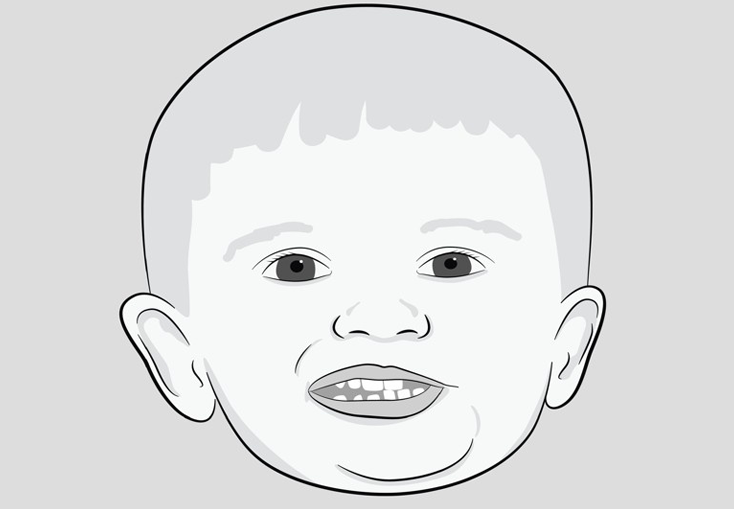
A course designed for parents, caregivers, chiropractors, and healthcare professionals.
Every child deserves the best start possible. But subtle cranial and facial distortions — often dismissed as “common” — can disrupt key developmental milestones during the most critical years of brain growth. This course helps you recognize those early red flags. Led by Drs. Marty Rosen and Nancy Watson, with parent-child coach Ashley Dalidowitz, you’ll learn how these structural imbalances affect neurological function and what you can do to support optimal development from the start. Whether you’re a parent seeking answers or a professional supporting pediatric families, this course offers the insight, tools, and clarity you need to support your child’s optimal functional development.

Taught by Dr. Ken Cooper, Lead Instructor – Peak Potential InstituteFor chiropractors and healthcare professionals seeking clarity in the understanding of cranial bone motion and dynamics.
This foundational course offers a clear, clinical framework for understanding the biomechanics behind cranial adjusting.
You’ll learn:
- The four primary motion patterns of the cranium
- We’ll explore how respiratory motion, dural tension, cerebrospinal mechanics and structural relationships (sutures and fontanelles) guide cranial motion, especially in infants where early patterns set the stage for development.
- How these patterns influence individual cranial bones
- Tools to assess proper cranial movement and function
- The impact of subtle restrictions on growth, development, and neurological integrity

Cranial distortion patterns, including Plagiocephaly now affects nearly 1 in 2 infants, yet many practitioners are trained to view it as cosmetic rather than neurological and biomechanical. This comprehensive program is designed specifically for chiropractors who want a clear, structured protocol for evaluating and managing cranial asymmetry with precision and confidence.
This course goes far beyond identifying a “flat head.” You will learn how plagiocephaly, brachycephaly, and scaphocephaly reflect deeper dural meningeal tension patterns, cranial base distortions, spinal involvement, and CSF imbalance, all of which influence growth, posture, and neurological organization.