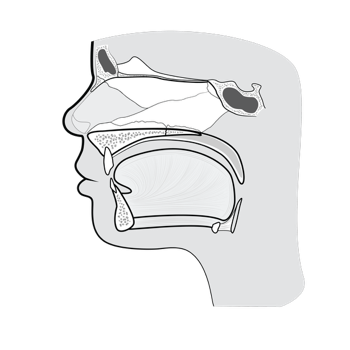
Oral Movement Patterns: Understanding Cranial, Airway and Functional Relationships
How Cranial Function, Breathing, Palatal Development and Oral Movement Patterns Influence Function Across the Lifespan
What Can Oral Movement Tell Us About the Person?
The way a person breathes, rests the tongue, moves the jaw, chews and swallows can reveal important relationships among cranial function, airway development, posture and oral function.
Oral movement does not occur in isolation. It develops within an integrated system involving the cranium, nervous system, airway, palate, temporomandibular joints, cervical spine and the body’s ability to adapt to gravity and movement.
In this six-week online program, Dr. Erin Rosen takes you from the foundations of the living, adaptable cranium through cranial motion, airway and sinus development, palatal form, sucking, chewing, tongue function and swallowing.
The goal is to help you recognize the patterns you are seeing and better understand why the patient may be moving, breathing or functioning that way.
SEE THE PATTERNS MORE CLEARLY. SUPPORT FUNCTION MORE CONFIDENTLY.
Develop a practical framework for observing cranial, airway and oral movement relationships so you can better recognize compensatory patterns in patient care.
What You’ll Learn
- Understand the cranium as a living, adaptable neurological and structural system.
- Recognize how breathing, airway, tongue posture, palate and jaw function influence oral movement.
- Identify compensatory patterns involving the facial muscles, jaw, neck, shoulders and body.
- Apply weekly observation exercises to connect cranial, airway and oral-movement findings.
- Use basic integration strategies for tongue rest, lip seal, nasal breathing, chewing and jaw isolation.
Resources Provided
- Six structured online classes
- Participant and Doctor attended Live Clinical Integration Sessions
- PDF workbooks and class transcripts
- Clearly defined learning objectives
- Weekly observation and application exercises
- Clinical concepts that can be incorporated into patient observation and assessment
Why Take This Course?
Breathing, sucking, chewing, swallowing and tongue movement are fundamental functions that develop in relationship with the cranium, airway and nervous system.
When normal movement is restricted or inefficient, the body adapts.
The lips may work harder to create a seal. The jaw may shift. The tongue may change its resting position. The head may move forward to support breathing. The neck and shoulders may become involved in swallowing. Changes in palatal development may occur alongside craniofacial and postural compensation.
By learning to recognize these relationships, practitioners can begin to see oral movement as part of a larger cranial, neurological and functional picture rather than as an isolated finding.
Who Is This Course For?
This program is designed for healthcare practitioners who want to better understand the relationships among cranial function, breathing, airway development, palatal form and oral movement.
It provides a practical framework for observing infants, children and adults and recognizing patterns that may be contributing to altered oral function and whole-body compensation.
Program at a Glance
- Format: Six structured online classes delivered over six weeks
- Clinical focus: Cranial function, airway, palate and oral movement
- Application: A specific observation or clinical application accompanies each class
- Progression: Each class builds upon the previous lesson, moving from cranial foundations to practical oral-movement integration
Course Contents
6 Modules | 6 CTAs
-
Module 01 The Living Cranium and the Neurological Power Board
Begin with the foundation for the entire program: understanding the cranium as a living, adaptable neurological and structural system.
Explore oral motor function and cranial distortion across the lifespan, the cranial “power board,” neurological communication, cerebrospinal fluid, dural meninges, functional tension and sutural adaptability.
You will also examine the importance of movement in cranial development and its relationship to breathing, eating and swallowing.
Clinical Application: Observe an infant, child or adult and note relationships among cranial shape, breathing pattern, posture and oral function.
-
Module 02 Primary and Secondary Motion in Cranial Function
Explore the different forms of movement affecting the cranium and how neurological organization and biomechanics interact.
Differentiate primary cranial motion from secondary or biomechanical motion and examine the influences of gravity, posture, guarding and voluntary movement.
Dr. Rosen also introduces three important clinical regions: the cranial vault, the craniofacial region and the sphenoid/sphenobasilar junction, along with their relationships to the TMJ and palate.
Clinical Application: Choose an observed movement pattern and distinguish what appears to be secondary movement from what may suggest a primary restriction.
-
Module 03 Sinus Development, Airway Function and Breathing Patterns
Examine how sinus development and craniofacial relationships may influence breathing and airway function.
Topics include sinus anatomy and symmetry, trauma and restriction, cranial-dural relationships, primitive reflexes, tongue posture, swallowing, thumb sucking, tongue thrusting, tongue restriction and bruxism.
Compare nasal and mouth breathing and explore filtering and humidifying air, diaphragm function, nighttime mouth breathing and forward-head posture.
Clinical Application: Observe resting breathing, tongue posture, lip seal and head position. Record which findings appear connected.
-
Module 04 Palatal Development and Craniofacial Compensation
The shape of the palate can provide important information about craniofacial development and compensation.
Explore high and narrow palates, flat and wide palates, cranial restriction patterns and relationships among the palate, TMJ, occlusion and cervical spine.
This class also examines the palate in relationship to sinus function, smell, taste and texture sensitivity, along with visible compensations including open-mouth posture, drooling, tongue compensation, forward-head posture, scoliosis and weight bearing.
Clinical Application: Examine palatal shape in relationship to facial symmetry, jaw position, tongue posture and cervical alignment.
-
Module 05 Foundational Oral Movement: Resting, Sucking, Chewing and Tongue Function
Move directly into the foundational oral movement patterns.
Learn what healthy resting posture looks like, including gentle lip seal, tongue position and relaxed tooth contact, and recognize excessive facial-muscle recruitment and other compensations.
Explore sucking and breastfeeding, suck-breathe-swallow coordination, jaw biomechanics, clicking and popping, hypermobility, bilateral molar chewing, jaw isolation, saliva, tongue-palate interaction and wave-like tongue movement.
The class also explores functional tongue restriction, underuse and conservative versus surgical approaches.
Clinical Application: Observe rest and chewing. Note lip activity, tongue position, jaw symmetry, tooth contact and participation of the neck or body.
-
Module 06 Swallowing, Corrective Exercises and External Devices
Bring the concepts from the entire program together through swallowing and practical integration.
Explore efficient swallowing, tongue movement, saliva and palate interaction, along with compensatory neck and shoulder movement.
Learn corrective exercises for tongue rest, lip seal, nasal breathing, chewing and jaw isolation.
Dr. Rosen also discusses when an external oral device may be appropriate, differences between soft and hard devices, tooth protection and repetitive neuromuscular retraining.
The class concludes by considering the physical, neurological and emotional dimensions of chronic TMJ patterns.
Clinical Application
Practice the six-step integration sequence:
- Relax the jaw and facial muscles.
- Create a gentle lip seal.
- Place the tongue in a comfortable resting position.
- Breathe through the nose for five minutes.
- Practice posterior chewing without recruiting the neck or shoulders.
- Observe the swallow for unnecessary movement.
What You’ll Be Able to Do
By the end of this six-week program, you will have a clearer framework for observing oral movement as part of the patient’s broader cranial and functional presentation.
You will be better prepared to:
- Recognize relationships among cranial shape, breathing, posture and oral function.
- Differentiate primary and secondary movement patterns.
- Observe nasal versus mouth breathing and associated compensations.
- Evaluate tongue posture, lip seal, jaw position and palatal form.
- Recognize compensatory patterns during sucking, chewing and swallowing.
- Identify unnecessary recruitment of the facial muscles, neck and shoulders.
- Understand the functional importance of bilateral chewing and jaw isolation.
- Recognize the difference between anatomical tongue restriction and functional underuse.
- Introduce basic oral-movement exercises for functional integration.
- View oral movement findings within a broader cranial, neurological and postural context.
Weekly Clinical Application
This is not simply a program about learning anatomy and concepts.
Each week asks you to observe.
Look at the cranium. Watch the breathing pattern. Observe the tongue. Examine the palate. Watch the jaw move. Look at what happens when the patient chews or swallows.
By progressing from observation to integration, you will begin connecting findings that may previously have appeared unrelated.
Meet the Instructor
Dr. Erin Rosen is a second-generation chiropractor who earned her Doctor of Chiropractic degree from Life University in 2013. While in chiropractic school, she served as president of the SOT® Club, taught SOT® seminars, proctored the ICPA pediatric certification series, and became the first student certified in SOT® by SOTO-USA. She also participated in Life University’s research track and presented research at the International Research and Philosophy Symposium.
Dr. Rosen graduated with honors from UMass Amherst with a degree in Kinesiology. Her additional training includes integrative nutrition and certifications in Viniyoga, Kundalini Yoga and prenatal yoga. Her background as a nationally ranked rhythmic gymnast and gymnastics coach further shaped her understanding of human biomechanics, neurological function and movement.
Her teaching brings these perspectives together to help chiropractors better understand the relationships among cranial development, airway function, oral movement and whole-body compensation.

More Courses from Peak Potential Institute

Understand CSF physiology and into the critical role of cerebrospinal fluid (CSF) within the central nervous system. Learn chiropractic cranial adjusting techniques to improve CSF flow and neurological regulation.
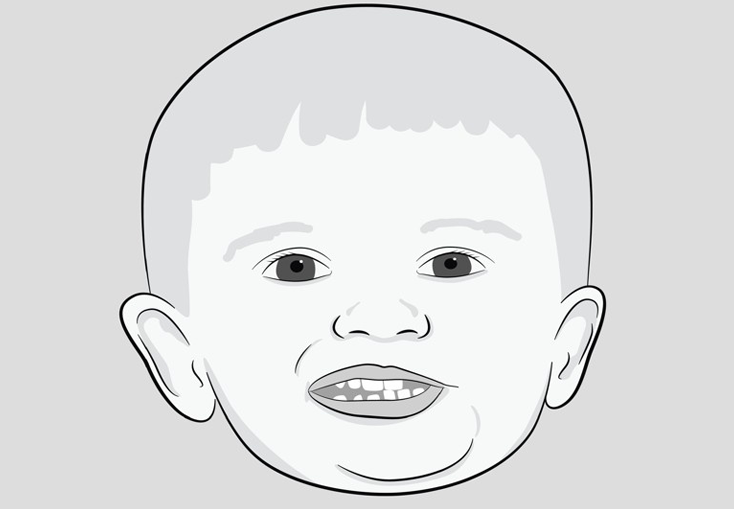
A course designed for parents, caregivers, chiropractors, and healthcare professionals.
Every child deserves the best start possible. But subtle cranial and facial distortions — often dismissed as “common” — can disrupt key developmental milestones during the most critical years of brain growth. This course helps you recognize those early red flags. Led by Drs. Marty Rosen and Nancy Watson, with parent-child coach Ashley Dalidowitz, you’ll learn how these structural imbalances affect neurological function and what you can do to support optimal development from the start. Whether you’re a parent seeking answers or a professional supporting pediatric families, this course offers the insight, tools, and clarity you need to support your child’s optimal functional development.
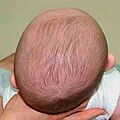
Cranial distortion patterns, including Plagiocephaly now affects nearly 1 in 2 infants, yet many practitioners are trained to view it as cosmetic rather than neurological and biomechanical. This comprehensive program is designed specifically for chiropractors who want a clear, structured protocol for evaluating and managing cranial asymmetry with precision and confidence.
This course goes far beyond identifying a “flat head.” You will learn how plagiocephaly, brachycephaly, and scaphocephaly reflect deeper dural meningeal tension patterns, cranial base distortions, spinal involvement, and CSF imbalance, all of which influence growth, posture, and neurological organization.