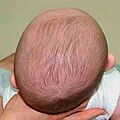
Evaluation & Corrections for Plagiocephaly and Flat Head Syndrome
Evaluation & Corrections for Plagiocephaly and Flat Head Syndrome: Advanced Cranial & Dural Assessment for the Modern Chiropractor
Cranial distortion patterns, including Plagiocephaly now affects nearly 1 in 2 infants, yet many practitioners are trained to view it as cosmetic rather than neurological and biomechanical. This comprehensive program is designed specifically for chiropractors who want a clear, structured protocol for evaluating and managing cranial asymmetry with precision and confidence.
This course goes far beyond identifying a “flat head.” You will learn how plagiocephaly, brachycephaly, and scaphocephaly reflect deeper dural meningeal tension patterns, cranial base distortions, spinal involvement, and CSF imbalance, all of which influence growth, posture, and neurological organization.
What You’ll Learn
Accurate Differentiation & Measurement
- Distinguish plagiocephaly, brachycephaly, and scaphocephaly
- Perform objective cranial measurements
- Identify different classification protocols
- Differentiate positional from synostotic presentations
- Recognize referral indicators
The Dural & Cranial Base Connection
- Understand intrinsic vs. extrinsic causes
- Evaluate dural meningeal tension patterns
- Assess sphenobasilar involvement and torsion
- Identify flexion/extension imbalances
- Recognize spinal–cranial reciprocal relationships
A Step-by-Step Clinical Evaluation Protocol
- Recognizing spinal imbalances affecting dural tension.
- Fontanelle and suture palpation
- Sphenoid wing and sphenobasilar testing
- Temporal, frontal, and parietal assessment
- CSF motion evaluation
- Learn to pinpoint the lynchpin is releasing growth restrictions, and creating normal/balanced growth patterns
Structured Correction & Balancing Procedures
- A protocol to determine where the primary cranial distortion is located and correction protocols to address the specific imbalances including:
- Sphenobasilar and sphenoid wing protocols
- Temporal bone balancing (RTRT and advanced options)
- Frontal molding and fruit jar techniques
- Occipital pump and spread
- Cranial molding and CSF directing strategies
Resources Provided
- Video class modules
- Evaluation & technique presentations
- Practical demonstrations
- Calls to action (CTAs)
- Interactive private Facebook group
- Complete PDF workbooks
- Email access to Dr. Rosen & Dr. Watson
Why Take This Course?
After completing this training, you will be able to:
- Confidently evaluate infant cranial asymmetry
- Differentiate structural from positional patterns
- Restore cranial base balance
- Reduce dural tension patterns
- Improve feeding, head preference, and postural symmetry
- Provide informed guidance to parents
- Communicate effectively about helmet use and co-management
Who Is This Course For?
This course is ideal for chiropractors who:
- Care for infants and children
- Practice chiropractic cranial adjusting techniques
- Want a repeatable, reproducible plagiocephaly protocol
- Are ready to elevate their pediatric skill set
If you are serious about mastering cranial evaluation and delivering neurologically sound pediatric care, this training provides the structure, clarity, and depth to do so.
Course Contents
11 Modules | 11 CTAs
-
Module 01 Defining Distorted Head Shapes: Plagiocephaly, Brachycephaly, Scaphocephaly
-
Module 02 Extrinsic Causes of Plagiocephaly
-
Module 03 Intrinsic Causes of Plagiocephaly
-
Module 04 Cranial Implications of Plagiocephaly
-
Module 05 Supportive Tips to Reduce Plagiocephaly
-
Module 06 Correcting Plagiocephaly
-
Module 07 Determining Cranial Adjusting Patterns
-
Module 08 Cranial Corrections and Balancing Techniques
-
Module 09 CSF Balancing Techniques
-
Module 10 Review of Protocols
-
Module 11 Demonstration of Contacts
Meet the Instructors
As early as first quarter in chiropractic school they were attracted to each other’s commitment to chiropractic and the pursuit of excellence. Their combined 80 years of personal and clinical and teaching experience, in delivering the chiropractic adjustment is unparalleled in the chiropractic profession. Their international outreach through teaching, writing and lecturing has been a driving force in their personal and professional careers since their first seminar taught together as students, in 1979.
Their years of experience have taught them what works and what does not work to create a successful practice and lifestyle. The more competent and comprehensive your expertise you will find that more patients will seek your services and your practice will grow exponentially.
Feedback From Our Students
-
Dr. Alexandra Crich
My takeaways:
I would share how to measure plagiocephaly with the device you shared, how to do cranial molding at a minimum, and when to refer out.It reinforced that I know what I am already doing in my office. I took your cranial course with the ICPA back in the day and there was some overlap which was great. My own daughter had a brain bleed and head shape issues due to vacuum extraction, and I used a lot of the techniques to help her 6 years ago!
I use all of it and avoid helmets over 95% of the time.
Yes, I would recommend this course.
It was great. Keep doing what you are doing and helping the profession (millions of babies!)
-

Dr. Erich Weidmann
My three takeaways:
1. Plagiocephaly is not just a head-shape problem, but a whole-body dural problem.
2. I have learned a clear, repeatable decision tree and not just a bag of techniques
3. It built in objective accountability.I need to stay curious and break out of the danger of repetition.
Three-month baby with plagiocephaly presented with only very small C1/2 movement restriction, which I mostly treat first. Gentle application of the protocol to adjust the sutures made a big difference.
I would recommend it for anyone who is treating pediatric patients. Some experience is required to understand the reasoning.
Thank you for sharing your experience with us.
-

Dr. Alyssa Shepherd
My takeaways: Great info on plagiocephaly and how to work with it – clearly presented – great info on what can cause cranial distortion to progress vs. progress slower vs. resolve.
I am incorporating it in my clinical practice currently.
Yes, I would recommend this course for a better understanding and approach to working with cranial distortion.
Thank you for the class!
More Courses from Peak Potential Institute
Ready to elevate your practice and transform patient outcomes? Our 38-class ONLINE Cranial Immersion Class offers an unparalleled opportunity to learn chiropractic cranial adjusting SM protocols from A to Z. Designed for practitioners eager to master the art and science of cranial work, this immersive course will guide you through every aspect—from foundational anatomy to advanced correction techniques.

This comprehensive online course delves into the anatomy and functionality of the vestibular system, emphasizing its role in balance, posture, coordination, and sensory processing. Participants will learn to evaluate and identify deficits and imbalances affecting overall health and functional capacity as well as adjusting protocols to address these issues.
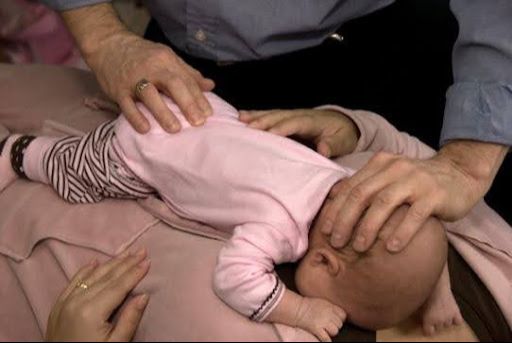
This course explores the sacro-occipital respiratory (SOR) motion and its critical role in neuromusculoskeletal balance and dural integrity. Restore rhythmic motion between sacrum and occiput to improve CSF dynamics, postural balance, and structural integrity.