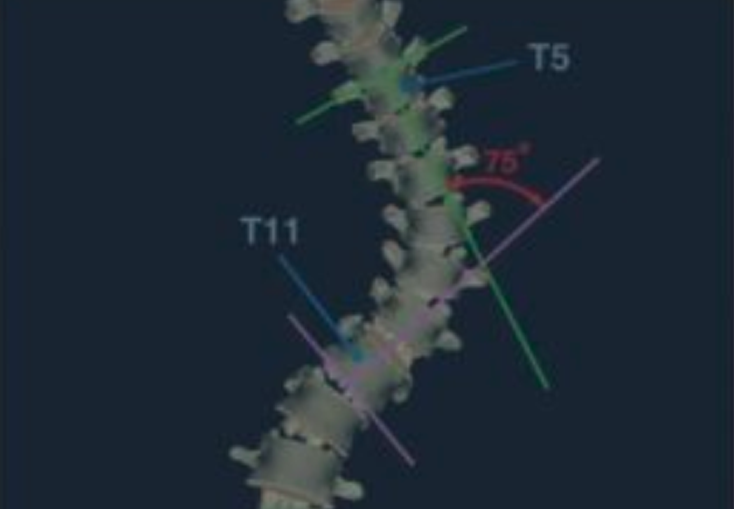
Scoliosis: Adjusting Protocols & Home Care
Scoliosis: Chiropractic Adjusting Protocols & Home Care Strategies – Support Structural Balance and Long-Term Spinal Correction
Scoliosis presents unique challenges in chiropractic care—requiring more than standard adjusting to create long-term, sustainable change. To effectively support spinal correction, chiropractors need a comprehensive approach that includes precise ancillary techniques and patient-specific home care protocols.
In this online course, you’ll gain the tools to evaluate, adjust, and support patients with scoliosis using gentle, targeted techniques that address spinal distortion patterns, postural imbalances, and compensatory tension. You’ll also learn how to implement simple, effective home care strategies that enhance and stabilize in-office corrections.
This course is ideal for chiropractors looking to deliver deeper, more consistent results for both pediatric and adult patients with scoliotic presentations.
What You’ll Learn
- Comprehensive assessment protocols to identify scoliosis patterns and related structural compensations
- Specific SOT®-based and cranial adjusting procedures to support spinal realignment and neurological balance
- Soft tissue and reflex techniques that enhance structural mobility and reduce spinal tension
- Home care routines and exercises to reinforce in-office corrections and improve posture, proprioception, and muscular support
- Strategies for patient education and engagement in long-term corrective care
Resources Provided
- Video class modules
- Evaluation & technique presentations
- Practical demonstrations
- Calls to action (CTAs)
- Complete PDF workbooks
- Full transcriptions of video classes
- Email access to Dr. Rosen & Dr. Watson
Why Take This Course?
- Scoliosis requires a multi-dimensional approach that goes beyond spinal adjusting alone
- Ancillary protocols and home care support are key to stabilizing progress and improving outcomes
- These techniques are gentle, effective, and easily integrated into family, pediatric, and wellness-based practices
Who Is This Course For?
Chiropractors who want to:
- Expand their effectiveness with scoliosis cases at any age
- Integrate soft tissue, cranial, and postural correction techniques into their scoliosis protocols
- Provide long-term solutions that empower patients and create lasting spinal change
- Deliver results that are measurable, sustainable, and neurologically driven
Whether you’re currently working with scoliosis patients or looking to add this specialized skillset to your practice, this course will give you the clinical tools and confidence to make a greater impact.
Course Contents
5 Modules | 5 CTAs
Class 1 – Types of Scoliosis and Management
Class 2 – Scoliosis Evaluation and Adjustments
Class 3 – Scoliosis Management: Demonstrations
Class 4 – Scoliosis Blocking Procedures
Class 5 – Home Care Protocols
Meet the Instructors
As early as first quarter in chiropractic school they were attracted to each other’s commitment to chiropractic and the pursuit of excellence. Their combined 80 years of personal and clinical and teaching experience, in delivering the chiropractic adjustment is unparalleled in the chiropractic profession. Their international outreach through teaching, writing and lecturing has been a driving force in their personal and professional careers since their first seminar taught together as students, in 1979.
Their years of experience have taught them what works and what does not work to create a successful practice and lifestyle. The more competent and comprehensive your expertise you will find that more patients will seek your services and your practice will grow exponentially.

Feedback From Our Students
-
Emily Renzi
My three takeaways:
1. Best to remove dural tension before adjusting other segments.
2. Really enjoyed the SOR technique to see where real tension exists.
3. All the cranial work was awesome, the real-life examples made it easier to digest and understand.Before I start adjusting, I am going to look for dural tension. The SOR is great to start with to check movement of the sacrum
Really loved the meningeal subluxation evaluation where you can feel the dura stretch at each segment and a fixation you would feel released. The Occipital Compression I have already been working but I loved the other indicators to verify it.
Really loved it, will be doing this course as a doctor.
-
Tiffany Korb
My three takeaways:
1. Really helpful way to go about treating patients in a variety of ways
2. I love cranial so love deepening my understanding
3. Dr. Jacobe has great clinical adviceRelevant technique:
Dural torque of the cervical spineYes, I would recommend this course. The information is crucial to be a practitioner to every patient who walks through my door.
-
Sergio Domenech
My three takeaways:
1. How important it is to pay attention to dural tension and understand the connection and importance it has.
2. Also understanding more about pediatric adjusting and just the anatomy of it all.
3. General understanding in order to be able to express and communicate it better.This has given a whole new lens of what is going on in our spines and already knowing that it is more than just a bone but adding the language is going to be so helpful.
All was very well presented so I think all techniques are going to be great for my art.
I am actively recommending this seminar to others. Would love to have you all back in ATL.
Very happy that I made the decision.