Praise For: Evaluation & Corrections for Plagiocephaly and Flat Head Syndrome
Hear directly from our students about the benefits of our program.
-

Gisella Ramon Brown, DC
My takeaways: Practical applications of adjustments, better understanding of how to communicate with the parents of patients and learning when to refer appropriately.
I have become rather obsessed with learning more about cranial adjusting, particularly after taking your in-person 48 hour training. It really does make me want to keep coming back to the notes and reviewing course materials- hence signing up for this course.
I’ve had multiple success stories of avoiding helmet fittings by treating little ones with this protocol. One case in particular stands out – marked scaphocephaly with ridging of the sagittal suture. The pediatrician was dismissing the mother and telling her her head shape would improve over time. After taking the time to truly feel for motion in all bones and seeing zero improvement I referred the child out for further imaging after suspecting craniosynostosis. I was contacted by the mother 3 weeks later to thank me for advocating for her and to let me know the surgery had been successful, and the child is on their way to recovery.
Absolutely, I would recommend this course, especially if you treat little ones and have an interest in taking our studies to a much deeper level.
It may feel overwhelming at first but just keep coming back to the notes. Also, these smaller online modules make the information much more digestible. Loved the contacts video too.
-

Dr. Erich Weidmann
My three takeaways:
1. Plagiocephaly is not just a head-shape problem, but a whole-body dural problem.
2. I have learned a clear, repeatable decision tree and not just a bag of techniques
3. It built in objective accountability.I need to stay curious and break out of the danger of repetition.
Three-month baby with plagiocephaly presented with only very small C1/2 movement restriction, which I mostly treat first. Gentle application of the protocol to adjust the sutures made a big difference.
I would recommend it for anyone who is treating pediatric patients. Some experience is required to understand the reasoning.
Thank you for sharing your experience with us.
-
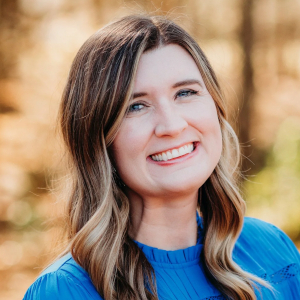
Dr. Alexandra Crich
My takeaways:
I would share how to measure plagiocephaly with the device you shared, how to do cranial molding at a minimum, and when to refer out.It reinforced that I know what I am already doing in my office. I took your cranial course with the ICPA back in the day and there was some overlap which was great. My own daughter had a brain bleed and head shape issues due to vacuum extraction, and I used a lot of the techniques to help her 6 years ago!
I use all of it and avoid helmets over 95% of the time.
Yes, I would recommend this course.
It was great. Keep doing what you are doing and helping the profession (millions of babies!)
-

Dr. Risa Sloves
This course has given me a better understanding of dural meningeal tension patterns and relationship to plagiocephaly, better protocols to clinically evaluate, and better understanding of cranial corrections.
As I continue to learn and improve in evaluating and treating the cranium, it has given me a deeper understanding of plagiocephaly which is a fairly common condition I see in newborn and infants.
I am applying them daily with a better understanding each time.
Yes, I would recommend this course. If you can learn online, it is definitely very helpful.
-

Dr. Stacey Hornick
The cranial adjustment is essential creating optimal brain growth and development without compensation. Practice, practice, practice. Don’t try to accomplish everything immediately. Look for the indicators and adjust as per instructed. Less is more. Be specific.
I can speak with more confidence as to what the goal of the cranial adjustment is. I have more certainty in my examination, my hands and my communication to parents. The magnitude of the work is measured by the outcomes in my pediatric practice. It feels wonderful to continue to learn applicable material at this stage in my professional career – a perfect fit for a chiropractor who exclusively sees children.
I recently had a toddler with a significant torticollis and plagiocephaly. He had facial asymmetry and a myriad of compensations. He responded very quickly to care. I have to admit I was surprised to see such immediate changes. I took pictures to document it and his parents were astounded. This has resulted in multiple family referrals, and all siblings are now under care as well.
Yes, I would recommend this course to others. If you are seeing children, or want to see more children in your practice, you’ll have to do your due diligence in becoming an expert in pediatric care. There’s so much more to adjusting a child with a developing brain and nervous system. The knowledge and skills taught in this course far exceeds anything you’ve learned at school. This course is one of many steps to understanding the importance of your role as a chiropractor.
Thank you Dr. Marty and Dr. Nancy for your continued commitment to our profession. You make us better every day.
The SOT® Pediatric Certificate Program
Demonstrate your commitment to your profession and patients, enhance your skills, and place yourself on the road to mastery in the art of chiropractic adjustment.