Praise For: SOT® – The Three Categories
Hear directly from our students about the benefits of our program.
-

Dr. Kelly Hutchison
“I took this program because I was hoping to truly unlock the basics of SOT and understand the 3 differentiating categories. I wanted to include it and slowly start incorporating blocks into my practice.
My three takeaways are:
1. Each category has been clearly explained and the tests shown
2. SOT does require a lot of testing but it does not need to take long to do it
3. The importance of the testing in your diagnosisThis course has helped broaden my scope to be a better chiropractor for my patients.
I have especially used category three as I have a lot of acute patients that visit me-I have seen a massive change in approaching them more specifically, with correct block position and by using the basic cranial move. Very happy to understand this category to help speed up healing.
Thank you for giving me some extra time to work through all the videos. I have made plenty of notes to go through and revisit as I go along. Thanks for your brilliant knowledge and exceptional expertise in this field.”
-

Dr. Sam Baldock
I have done the SOT seminars here in Australia twice and found them great to understand the basics. What this program has done has given me a much deeper understanding of the underlying mechanisms and how to link it all from my diagnostics all the way through to scheduling and patient education. I have already seen breakthroughs with patients who had previously stagnated which is amazing.
It has helped me better understand my body and the way it has compensated since a young age which has made a lot of things click. It has also helped me in practice significantly with how I now analyse and treat my patients
I have a friend who 12 months ago had an unstable grade 2 L5 spondy surgically stabilised and then a disc replacement of L4. He had been getting consistent hip/ pelvis issues holding his recovery back and we had been blocking him as a Category II but it kept coming back. Since doing this course I have now been able to stabilise the Category II and transition him to a Category I and he is seeing significant improvement with his pelvic stability allowing him to step up his rehab in a big way.
This course is great and really helps to put all the pieces together to properly integrate SOT into a clinical setting
Thank you for putting this course together, it has been an amazing program, and I will continue to recommend it to other colleagues.
-

David Mattinen, DC
Great value. Professional and good customer service/product. SOT is the bomb!
Take a listen and find out why after 26 years in practice and I am wondering what the hell I was doing before. I could go on but I think you get it.
Simple but profound. 80-year-old woman…regular of mine. Stenosis, check ok nic pain but living independently. After a few visits with SOT, she came in floating through the office (by comparison). I could feel buoyancy throughout her spine despite her challenges.
I would recommend this course: logical, anatomically and clinically sound paradigm to deliver ultra-helpful subluxation care grounded in science.
Keep it up!!
-
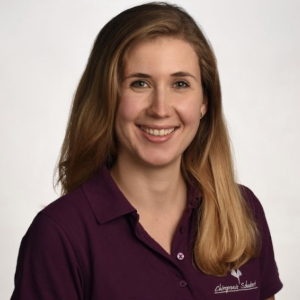
Dr. Anthea Wöhrstein
Great combination of theory and practical application.
It was really helpful in identifying Category II patients that I couldn’t stabilise in their pain perception. After applying the Category II procedure all of them stabilised, improved and are now doing much better.
Yes! If you are interested in SOT this is a great way to start or deepen your knowledge.
-
Jennifer Drover, DC
This program is a very thorough introduction to the three categories and it gives a new student all the information.
My husband and I are shifting our practice style to SOT.
I am using this material daily. My patients with chronic conditions have made a huge shift and they are very excited.
Yes, I would recommend this course. It is great value for money spent!
The SOT® Pediatric Certificate Program
Demonstrate your commitment to your profession and patients, enhance your skills, and place yourself on the road to mastery in the art of chiropractic adjustment.