Implications for Neurodevelopment from Birth to Three Years
The first three years of life represent a critical period of neurological growth and structural organization. During this window, sensory input, motor sequencing, spinal and cranial development, and autonomic regulation interact to establish foundational neural pathways.
The salutogenic model of health, introduced by Antonovsky, emphasizes factors that support resilience and adaptability rather than focusing solely on pathology. Pediatric chiropractic care, particularly spinal and cranial evaluation and adjustment, aligns with this model by seeking to optimize nervous system function and structural balance. This article explores the theoretical framework, clinical rationale, and developmental implications of chiropractic care in infants and young children from birth to age three.
Early childhood development is profoundly influenced by structural, neurological, and environmental factors. The birth process itself represents a significant mechanical and neurological event. During the perinatal period, mechanical forces acting upon the cranium, cervical spine, and dural system may influence feeding mechanics, primitive reflex activation, autonomic regulation, and postural development.
Within this context, pediatric chiropractic care proposes that early identification and correction of structural distortions may support optimal neurological function. Framed within a salutogenic model, this approach emphasizes resilience, adaptability, and prevention rather than reactive treatment of symptoms.
The Salutogenic Model and Sense of Coherence
Aaron Antonovsky’s salutogenic model shifts the clinical focus from disease causation (pathogenesis) to health creation (salutogenesis). Central to this theory is the concept of Sense of Coherence (SOC)—the degree to which individuals perceive life as comprehensible, manageable, and meaningful (Antonovsky, 1979).
Applied to parenting, SOC reflects a caregiver’s ability to interpret developmental challenges as understandable and addressable. Clinical partnerships that enhance parental confidence and provide structural explanations for infant challenges may contribute to reduced stress and improved caregiving environments.
Chiropractic care aligns with this framework by emphasizing adaptability of the nervous system. Rather than targeting isolated symptoms, chiropractic adjustments aim to improve the body’s capacity to respond effectively to internal and external stressors.
Birth as a Mechanical and Neurological Event
Birth represents a complex biomechanical process. Vaginal delivery, prolonged labor, induction, cesarean section, forceps, vacuum extraction, and NICU interventions may each influence cranial molding, cervical mobility, and dural tension.
Mechanical stress during birth can affect:
- Cranial bone motion
- Sphenobasilar synchondrosis relationships
- Upper cervical alignment
- Overall dural meningeal tension
- Feeding coordination
- Developmental compensations and challenges
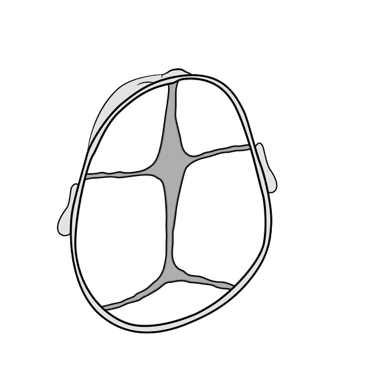
Because cranial sutures remain patent and malleable in infancy, early structural stress may either resolve naturally or establish compensatory patterns. Early evaluation may identify asymmetries before they influence developmental sequencing.
Structural Contributions to Childhood Challenges
As chiropractors we often find parents bringing their children in for care for a variety of reasons. One of the most common early recognizable issues/challenges facing parents these days are feeding/digestion/latching/nursing issue. Feeding and digestion require coordinated cranial nerve function, jaw mobility, cervical stability, and rhythmic neuromuscular control. Some clinical contributors to latch difficulty include:
- Palate distortions – especially a high narrow palate
- Hypersensitive gag reflexes
- Tethered Oral Tissues (TOTs)
- Cervical restriction – Torticollis
- Temporomandibular (jaw) tension
“Common” Versus “Normal” Developmental Glitches
While many early-life challenges are labeled “common,” including reflux, colic, head preference, plagiocephaly, and mild developmental delays, common prevalence does not equate with physiological normalcy.
From a neurological perspective, early asymmetries may represent compensatory adaptations rather than benign variations. The first 1,000 days of life represent a critical window of synaptogenesis (creating underlying neurological adaptability) and neuroplasticity. Structural distortions during this window may alter sensory input, affect dural meningeal tension, nerve transmission and response, change cranial bone or spinal growth patterns which in turn may impede neural pathway development.
Positional Influences and Cranial Development
The “Back to Sleep” campaign (later renamed “Safe to Sleep”) unintentionally increased positional plagiocephaly and brachycephaly.
Nighttime supine positioning, combined with daytime device usage and reduced tummy time, can lead to:
- Cranial asymmetry
- Delayed motor development
- Postural compensations
- Delayed motor sequencing
- Postural compensations
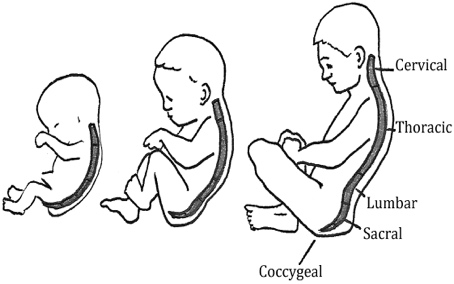
Parents can mitigate this risk with supervised tummy time variations, side-lying play, head-turning games, feeding position rotation, and mindful observation. Balanced movement exposure and supervised prone activity (“tummy time”) support sensory input essential for cortical development and spinal curve formation.
Primitive Reflex Integration and Neurological Sequencing
Primitive reflexes are essential survival mechanisms activated at birth. Integration of reflexes such as Moro and Asymmetric Tonic Neck Reflex (ATNR) occurs within defined developmental windows.
Failure of integration may contribute to:
- Motor delays
- Postural asymmetry
- Sensory processing challenges
- Social and behavioral dysregulation
As Chiropractors we can evaluation whether structural restriction and aberrant neurological accommodation interfere with reflex integration by altering afferent input and proprioceptive feedback.
Craniofacial Structural Influences on Neurological Function
Craniofacial structure is not simply architectural, it is neurological. The alignment, mobility, and balance of the cranial and facial complex influence how sensory information is gathered, processed, and integrated within the central nervous system. When structural relationships within the cranium and face become imbalanced, they can alter dural tension patterns, affect cranial nerve transmission, modify airway mechanics, and change the quality of afferent input reaching the brain.
The craniofacial system houses and protects critical neural structures, including the brain, cranial nerves, vascular pathways, and sensory organs. Structural asymmetry or restriction can influence:
- Dural membrane tension, affecting central nervous system tone and adaptability
- Cranial nerve function, altering sensory and motor signaling
- Vestibular and visual integration, impacting balance, spatial awareness, and coordination
- Airway integrity and nasal breathing, which influence oxygenation, autonomic balance, and cortical regulation
- Orofacial function, affecting feeding, swallowing, speech development, and vagal tone
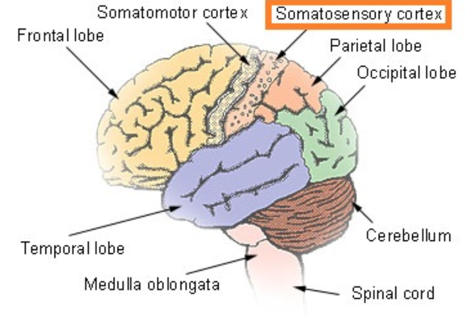
Because the brain develops in response to sensory input, altered mechanical relationships in the craniofacial complex can modify the quality and quantity of afferent stimulation. Changes in proprioceptive, vestibular, visual, and trigeminal input may influence attention, behavioral regulation, motor coordination, and emotional processing.
The relationship between structure and function is foundational to neurodevelopment. Restriction alters sensory input; altered sensory input shapes neural circuitry. When craniofacial mechanics are balanced and adaptable, the nervous system receives clear, organized information. When structural patterns are distorted or restricted, neurological output may reflect compensatory strategies rather than optimal integration.
In this way, craniofacial imbalances are not isolated biomechanical findings, they represent potential influences on the broader neurological landscape, particularly during periods of rapid growth and developmental plasticity.
Stress, Adaptability, and Developmental Trajectory
Stressors including mechanical, environmental, infectious, or emotional challenge the developing nervous system. When supportive structures are compromised, adaptive capacity may be reduced.
Development unfolds sequentially. Milestones achieved out of order or not achieved may reflect altered neurological input. Because neurogenesis depends on appropriate sensory stimulation and input, restricted movement, physiological stresses, or structural asymmetry may influence cortical organization.
Within the salutogenic framework, improving adaptability supports resilience against ongoing stress.
Scope, Safety, and Interdisciplinary Collaboration
Pediatric chiropractic care, because it addresses the underlying issues, supports and compliments medical or lactation support.
Challenges in interdisciplinary integration often stem from communication barriers rather than clinical incompatibility. Shared goals include:
- Optimizing feeding efficiency
- Supporting motor development
- Enhancing autonomic regulation
- Promoting participation in daily life
Different disciplines contribute distinct tools toward these shared outcomes.
Conclusion
The first two-three years of life establish foundational neurological architecture. Birth represents both opportunity and stress. Early structural asymmetries may influence feeding, motor sequencing, reflex integration, behavioral regulation, and alter developmental potential and thresholds
Within a salutogenic model, pediatric chiropractic care seeks to enhance adaptability and resilience by optimizing structural balance and nervous system function. When combined with informed parenting and interdisciplinary collaboration, early support may contribute to improved developmental outcomes.