One of the first questions new parents ask is, “When should my baby roll over?” Soon that question becomes, “When should they sit? Crawl? Walk? Say their first words?”
These questions aren’t simply about checking boxes on a developmental chart. They are questions about the remarkable construction of the human nervous system.
Developmental milestones are much more than memorable moments to celebrate. They are windows into your child’s neurological development. Each milestone reflects the maturation of the brain, the integration of the nervous system, and the body’s growing ability to interact with the world. These are pre-programmed into the nervous system, and their development not only affects mobility but also cognitive function, social interaction, neurological processing and threshold adaptability.
What this means is that by understanding why these milestones matter allows parents to move beyond simply waiting for the next achievement and begin appreciating what each accomplishment represents beneath the surface. They can also be harbingers of how your child will function later in life. Development of proper neurological integrity in the first two years, before higher brain centers and processes develop, is predicated on these developmental milestones appearing, adapting and integrating the nervous system.
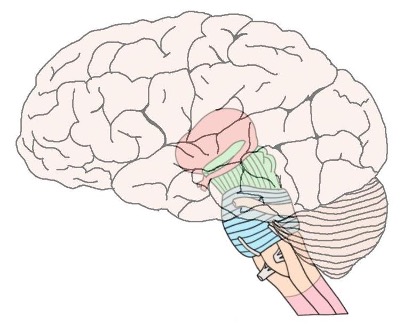
The first two years of life represent the most rapid period of neurological growth a human being will ever experience. During the first year alone, the brain increases in volume by approximately 101 percent. During the second year, it grows another 15 percent. By age two, nearly 80 percent of the adult brain has already developed. Even more remarkable, the cerebellum, the center responsible for coordination, balance, and movement, increases in size by nearly 240 percent during the first year. Located in this structure oar pre-programmed proprioceptive feedback loops that trigger the developmental and motor milestones.
No other period of life comes close to the level of neurological development and integration that occurs in the first two years of life. Think of it as constructing the foundation of a skyscraper. While the building may continue to rise for years, the strength of every floor depends on how well the foundation was built. The same is true for your child’s nervous system.
Visible milestones are the result of thousands, sometimes millions, of neurological connections (synapses)* that have already formed behind the scenes.

In the early years, the brain is far more concerned with gathering information than producing performance. Every touch, every sound, every movement, every visual experience becomes input that helps organize the developing nervous system. Each new experience strengthens pathways that will later support learning, movement, language, emotional regulation, and social interaction. Before your child can produce skilled output, they must first receive quality input.
It is important to understand that development follows a sequence. Milestones build on each other. Babies don’t simply wake up one day and walk. They must learn to lift their head, roll front to back, sit up by themselves, creep and crawl as the nervous system is building layer upon layer of function and integration. The efficiency of the development of the previous stage reflects the quality of future development. The nervous system is building layer upon layer of function. When one stage develops efficiently, the next stage has a stable platform from which to grow.
Common Isn’t Always Normal
Today’s parents are surrounded by advice that says, “Every child develops differently.” While this is certainly true, there is also an important distinction between normal variation and compensation. Because we are fault tolerant beings and our nervous systems have an amazing capacity for compensation many developmental challenges have become so common that we mistakenly assume they are normal. Things like flat spots on the head, persistent head turning to one side, difficulty with tummy time, delayed crawling, retained primitive reflexes, feeding challenges, facial asymmetry and other challenges. may be common, but they should never simply be dismissed without asking why they are occurring.
Our goal here is not to make parents anxious. It is to encourage awareness. The earlier we recognize a developing compensation, the easier it is to support normal neurological development before adaptive patterns become established.
Every developmental milestone tells us something about how well the nervous system is organizing itself. Motor milestones reveal how efficiently the brain communicates with muscles. Sensory milestones demonstrate how well the child processes information from the environment. Communication milestones reflect the integration of hearing, vision, movement, memory, and higher brain function. Social milestones show how children learn to connect, with others, share, and express feelings. All these milestones are integrated and dependent on each other for proper development.
When milestones are delayed or skipped, they do not necessarily diagnose a condition. Instead, they invite us to look more closely at how the nervous system is developing.
The nervous system does not develop in isolation and both structure and function are integrated. The rapidly growing brain is protected by the skull and supported by the spine and connected to the body through an intricate network of cranial and spinal nerves. Because these systems are closely interconnected, structural imbalances or cranial distortions may influence the quality of neurological input during this critical developmental window. This is why careful observation of cranial shape, facial symmetry, neck mobility, feeding ability, and developmental progress can provide valuable information long before more obvious symptoms appear.
No one spends more time watching a child than their parents.
Parents are often the first to notice:
- “They always look to one side.”
- “Something seems different about their head shape.”
- “They’re struggling with tummy time.”
- “They aren’t meeting milestones like other children.”
- “They startle very easily.”
- “Something just doesn’t seem quite right.”
Parents should never underestimate these observations. Trusting your instincts and seeking an objective evaluation when something doesn’t seem right is often one of the most important gifts you can give your child.
What we are looking for here is to build potential not chase problems. This premise is based on a simple principle. Rather than waiting until symptoms appear or become severe enough to demand treatment, we believe in supporting the nervous system while it is building its lifelong foundation. The first two years are not simply about surviving infancy. They are about establishing the neurological framework upon which every future skill will depend. Every milestone achieved through a well-organized nervous system represents another step toward your child’s full potential.
*The peak production of neurological synaptic development occurs at 8 months of age.